 Sustainability Annual Report 2025
UC Berkeley built on previous planning, operational and programmatic efforts to achieve multiple important milestones.
READ MORE ABOUT SUSTAINABILITY AT UC BERKELEY
- Thanks to the ongoing work and advocacy of staff, students and faculty, the Berkeley Clean Energy Campus (BCEC) project was approved by the University of California Regents in July 2025. The BCEC is a critical infrastructure renewal and decarbonization project that will include a new central plant and thermal energy storage tank, which together will produce hot water and store chilled water to be distributed to buildings on the eastern side of the campus. The new plant will be sized to adequately serve the entire campus as future phases of the project are implemented. Construction is scheduled to begin in 2026.
- With leadership from the Office of Sustainability and participation from units and individuals across campus, UC Berkeley earned the honor of becoming the first university in the world to achieve an AASHE STARS (Association for the Advancement of Sustainability in Higher Education’s Sustainability Tracking, Assessment, and Rating System) Platinum rating under the latest STARS 3.0 standards. STARS is the most widely recognized framework for publicly reporting comprehensive sustainability performance across colleges and universities, and Berkeley’s rating indicates exceptional innovation and execution of sustainability principles in all areas of campus.
UC Berkeley reduced emissions by 8% compared to last year, completed three LEED buildings, procured healthier and more sustainable food and beverages, expanded green lab certifications and reduced recycled waste. Challenges remain in complex areas such as fully eliminating single-use plastics, creating integrated reporting methodologies and accommodating a growing campus user base.

Stories
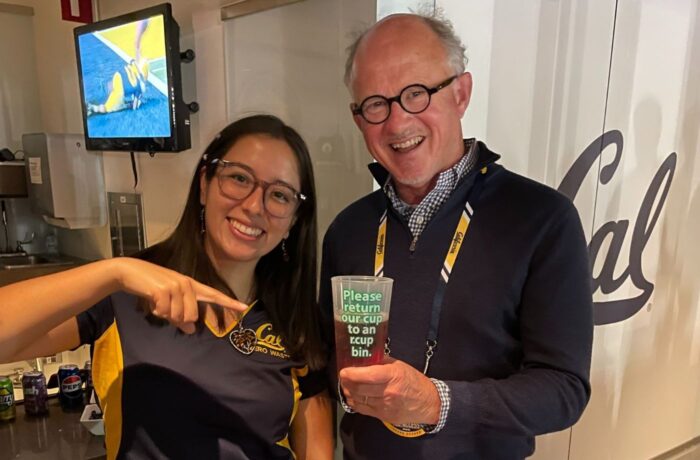

Reusable Cup Collaboration Brings Cal Closer to Zero Waste
Cal Athletics teamed up with Cal Zero Waste, Levy, Pepsi and r.World Reusables to make football game days zero waste. Levy served drinks at California Memorial Stadium from durable, reusable plastic cups. Fans deposited cups into clearly marked return bins at the game, while r.World collected, sanitized and returned them for the next game. This change diverted thousands of cups away from the landfill, cut greenhouse gas emissions from production and disposal, and reduced litter.
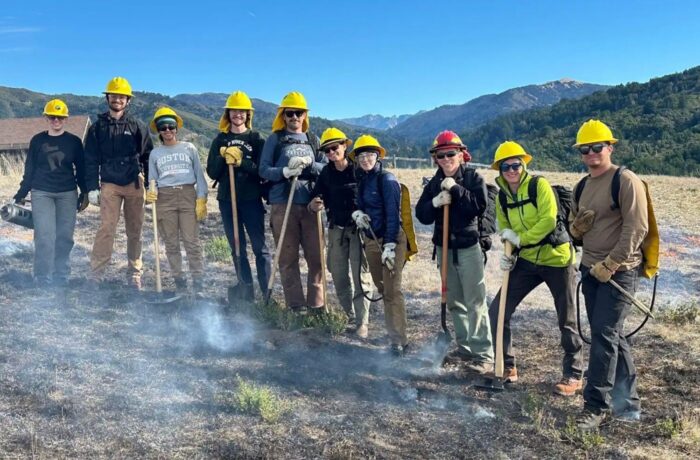
GrizzlyCorps Exemplifies Campus-Community Partnerships and Student Empowerment
GrizzlyCorps, an AmeriCorps fellowship designed by Project Climate at UC Berkeley’s Center for Law, Energy & the Environment in partnership with California Volunteers, sends recent college graduates into rural communities across California to promote regenerative agri-food systems and fire and forest resilience. The program received a UC Berkeley Chancellor’s Award for Campus-Community Partnership in 2025, despite having lost substantial funding due to federal budget cuts. GrizzlyCorps has placed over 150 volunteers around the state.
EMISSIONS
*Methodological changes in scope 3 accounting introduced beginning in 2019
**90% direct reduction of total emissions from 2019 levels with residual emissions negated by carbon removal
Emissions decreased by 8% compared to last year, primarily due to reduced natural gas use in both cogeneration and laboratory operations. Electricity-related emissions also declined significantly as a result of updated emission factors provided by PG&E and increased procurement of clean electricity through the UC Clean Power Program. Additionally, further reductions were achieved through increased recycled plastics waste diversion. A new methodology was introduced for calculating commuting emissions.
ENERGY – RENEWABLE ENERGY USE
ENERGY USE INTENSITY (EUI)
UC Berkeley saw a decrease in its EUI in the calendar year 2024.
FOOD
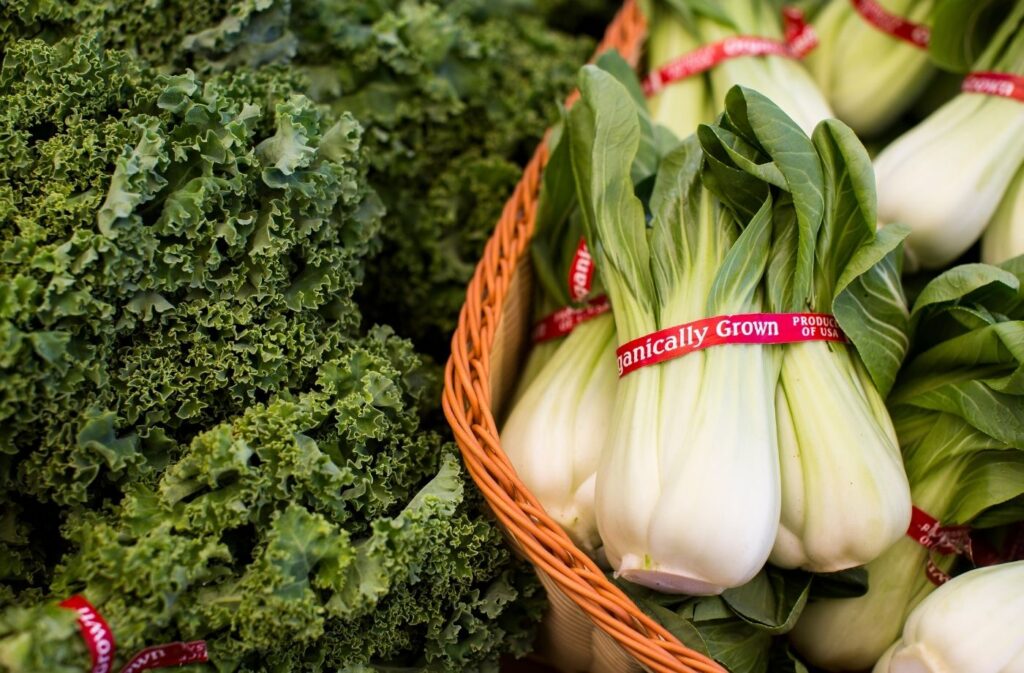
of food and beverage purchases met sustainability criteria ($3.3M)
of food and beverage purchases were plant-based ($6.6M)
Spend on sustainable food was 6% below goal levels due to challenges with record tracking, supply chain consolidation and fiscal headwinds. However, plant-based food procurement has remained strong.
Green building
Two LEED Gold buildings were completed, Helen Diller Anchor House and xučyun ruwway Graduate Student Apartments. In addition, the campus completed one LEED Platinum building: Bechtel Engineering Addition (Grimes Engineering Center). In all, over 1.4 million square feet of all-electric structures are under construction. Finally, a Parksmart project for 66 electric vehicle chargers is under construction.
3 Platinum, 17 Gold, 10 Silver and 1 Certified
Total number of LEED certifications
Healthy Vending

healthy vending spend on food ($17K)

healthy vending spend on beverages ($2K)
Healthy vending is defined as meeting UC’s Healthy Vending Guidelines. Data is from 2023–24.
Eighty-five percent of beverage vending sales were healthier options in fiscal year 2023–24, exceeding the 50% requirement. UC Berkeley requires 70% of shelf space in vending and retail spaces to meet healthier standards.
procurement
The University reports on green spend, as defined in the Sustainable Procurement Guidelines, and reached out to suppliers for spend data in four product categories for this year’s report.

green spend on electronics (72%)

green spend on indoor office furniture (66%)

green spend on cleaning supplies (31%)

green spend on office supplies (31%)
Green spend is defined as meeting preferred or minimum criteria in UC’s Sustainable Procurement Guidelines.
Suppliers reporting: Electronics (11), Furniture (6), Cleaning supplies (7), Office supplies (5).
UC Systemwide Spend Analytics category data provided by CalUSource.
Sustainable Building & Laboratory Operations

total assessed green laboratories
In summer 2024, the Office of Sustainability launched an incentive program to encourage participation in Green Lab certification. Green Lab certification is also required for participation in UC Berkeley’s ultra-low-temperature freezer rebate program, which helps departments purchase higher-efficiency units for their lab spaces. This program has resulted in 28 new Green Lab certifications.
Transportation
Single-occupancy-vehicle rates dropped from 40% to 34% among faculty and staff. Student and staff alternative commute rates increased from 76% to 80% as the campus improves pedestrian access and telecommute options. In addition, 71% of all vehicles and 78% of sedans and minivans acquired in 2025 were electric (zero-emission), plug-in hybrid or clean transportation fuel.

of students and employees are utilizing sustainable commuting methods
of all vehicles and 78% of sedans and minivans acquired in 2025 were sustainable vehicles*
18%
of the fleet consists of sustainable vehicles*

EV charging ports
*Sustainable vehicles are defined as electric (zero-emission), plug-in hybrid or clean transportation fuel.
WATER
*Based on a 3-year average of fiscal years 2005-08
**2025 goal is a 36% reduction from baseline.
Water use on campus was at 12,119 gallons per user, which outperformed the 2025 goal of 13,105 gallons by 8%.
ZERO WASTE – GENERATION
*These numbers might include a small amount of incineration that is being phased out.
**In 2021, waste generation per weighted campus user spiked due to pandemic-related closures as base-level operations continued but the number of users on campus decreased.
Overall waste generation on campus decreased by 718 tons compared with 2023–24, which is a 10% improvement. Recycled waste decreased by approximately 24% due to the successful elimination of single-use plastics in dining and vending, along with ongoing educational efforts targeting students, staff and vendors.
ZERO WASTE – DIVERsion
*Waste incineration was counted as diversion prior to July 2022.
Waste diversion, excluding construction and demolition (C&D), holds steady at 53% and with C&D remains constant at 55%. These numbers are still below the goal of 90%; however, the consistency of these numbers is mainly due to the decrease in recycled waste and compost at the same time that landfill waste also decreased slightly. There are also opportunities to improve C&D reporting going forward.
Single-Use Plastics Phase-Out
Complete Phase-out*
- Plastic bags
- Beverage bottles (UC dining facilities)
- Beverage bottles (vending machines)
Partial Phase-out
- Foodware (UC dining facilities)
- Foodware (third-party dining facilities)
Starting Soon
- N/A
*Complete phase-out of single-use plastics may include exemptions where reasonable alternatives to plastic do not exist.
All single-use plastic beverage containers have been phased out except for Gatorade products. However, canned Gatorade products are being promoted at retail and vending sites in fall 2025, and there is a new method being rolled out for departments to purchase cans from Pepsi. As part of the Green Labs program, which more labs are joining over time, bins are being standardized, including for lab plastics, and the University is working with circular economy companies Polycarbin and Labcon to increase purchasing of their lab products.
Awards
UC Berkeley was the first university in the world to achieve a Platinum rating in STARS 3.0 and has been selected for the Institutional Highlights section of the 2025 Sustainable Campus Index. UC Berkeley is featured as a top performer in 10 categories.
A full list of awards is featured on the UC Office of the President’s website.