 Sustainability Annual Report 2025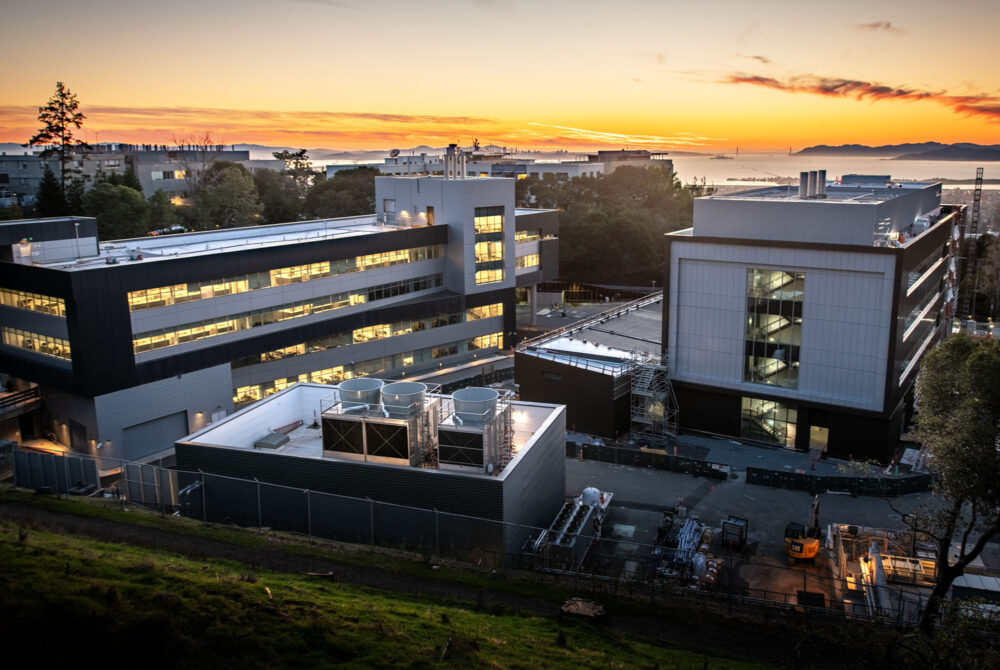
Lawrence Berkeley National Laboratory (Berkeley Lab) is a Department of Energy Office of Science research laboratory operated by the University of California.
The Lab continues to advance strong fundamental improvements in sustainability performance, with a focus on deep energy efficiency, improved building operations and advanced use of analytics.
Read More about sustainability at berkeley lab
Sustainability performance highlights include:
- Energy savings: The Lab maintains a portfolio of energy and water savings that currently generates an annual utility bill savings of over $1.1 million, driven primarily by a dedicated ongoing commissioning (OCx) team. Annual savings exceed program costs.
- Reductions in natural gas consumption: The Lab consumes 29% less natural gas (weather corrected) than it did in 2015.
- Electrified buildings: The Lab is continuing a tradition of all-electric space and weather heating in its new buildings. A new electrified laboratory building opened in early 2025, and a new all-electric multipurpose building, including an all-electric cafeteria, is under construction.
- Low waste generation: The Lab is maintaining a level below 0.5 pounds of municipal solid waste generation per person-day.
- Dry cooling: The Lab has started construction on a new dry cooling plant, which will serve high-performance computing capabilities. The dry coolers are expected to reduce water consumption at the Lab’s supercomputing facility by about 60% and save approximately $30 million in utility costs over 25 years compared to the use of traditional evaporative cooling towers.
Explore Berkeley Lab’s sustainability data at sbldata.lbl.gov.
Stories
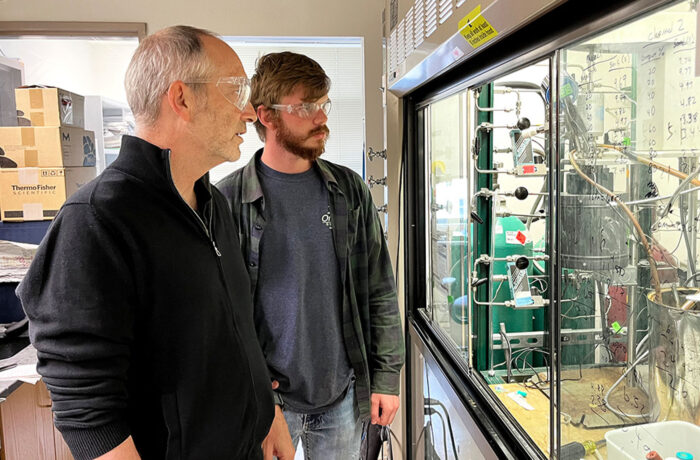

New Process Vaporizes Plastic Bags and Bottles, Yielding Gases to Make New, Recycled Plastics
A new catalytic process, discovered by researchers at Berkeley Lab and UC Berkeley, efficiently reduces polymers to chemical precursors — bringing a circular economy for plastics one step closer to reality.
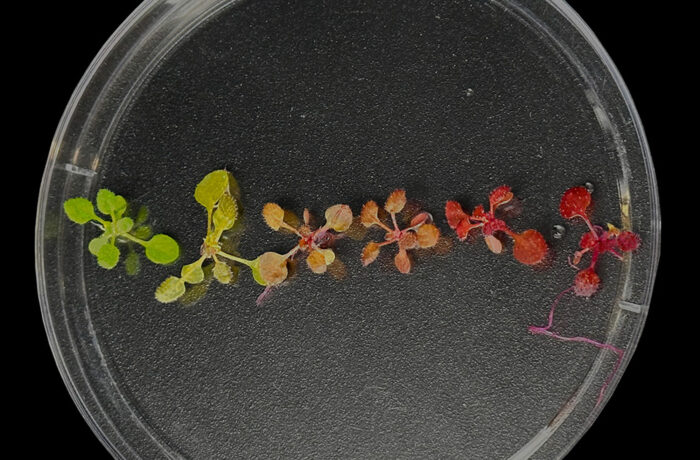
New Plant Engineering Method Promises to Dramatically Improve Biofuel and Bioproduct Development
Scientists from Berkeley Lab have contributed to new research showing that some simple changes to a bacterium called Agrobacterium can significantly improve the efficiency of introducing DNA into a genome, also known as “transformation.” The work opens up new opportunities to more efficiently optimize crop plants and fungi for conversion into biofuels and bioproducts.
EMISSIONS
*Methodological changes in scope 3 accounting introduced beginning in 2019
**90% direct reduction of total emissions from 2019 levels with residual emissions negated by carbon removal
Berkeley Lab achieved a 28% reduction in greenhouse gas emissions in federal fiscal year 2024 compared to fiscal year 2019, with a slight decrease in emissions since the previous year. Emissions from use of natural gas are 19% lower than in fiscal year 2019 and decreased 20% since the previous year.
ENERGY USE INTENSITY (EUI)
Berkeley Lab saw an increase in its EUI in the calendar year 2024. Berkeley Lab’s UC EUI metric for calendar year 2024 was 21% lower than in calendar year 2015, beating the 2024 UC EUI target of 174 kBtu per square foot. Natural gas consumption per square foot was 37% lower than in 2015, with overall natural gas consumption 29% lower.
Green building
Berkeley Lab opened BioEPIC, a new 73,000-square-foot laboratory building, in early 2025. The building achieved LEED v4 Gold certification with aggressive energy performance targets and sustainability features including all-electric space and water heating, heat recovery systems and passive design strategies. Construction continues on a new 47,000-square-foot cafeteria and conference center. This facility is also targeting LEED Gold and will be all-electric, including a commercial kitchen.
1 Platinum and 6 Gold
Total number of LEED certifications
Transportation
of all vehicles and 57% of sedans and minivans acquired in 2025 were sustainable vehicles*
46%
of the fleet consists of sustainable vehicles*
EV charging ports
*Sustainable vehicles are defined as electric (zero-emission), plug-in hybrid or clean transportation fuel.
Berkeley Lab has 29 employee electric vehicle charging locations, with two new Level 2 stations installed in early 2025. As of summer 2025, the Lab’s employee EV charging program includes 450 members. This program growth follows the successful transition of all Level 2 EV charging stations in UC fiscal year 2024–25 to new hardware that enables accurate utilization tracking and direct payments. Plug-in hybrid vehicles accounted for 57% of all sedan and minivan acquisitions in federal fiscal year 2024.
WATER
*Based on fiscal year 2007-08
**2025 goal is a 36% reduction from baseline.
Berkeley Lab’s per person water consumption (not corrected for weather) for UC fiscal year 2024–25 was 43% lower than in 2007-08, but consumption per person increased over the last year. This is due in part to increased water usage for cooling of scientific loads, including high-performance computing systems and accelerators. The Lab has been actively enhancing the quality of monitoring for water consumption and single pass cooling, including rapid notification alerts for high water usage and leak incidents.
ZERO WASTE – GENERATION
*These numbers might include a small amount of incineration that is being phased out.
**In 2021, waste generation per weighted campus user spiked due to pandemic-related closures as base-level operations continued but the number of users on campus decreased.
Berkeley Lab’s waste generation for UC fiscal year 2024–25 was approximately 0.47 pounds per person per day. While this represents an increase from the previous fiscal year, waste generation remains 54% below the fiscal year 2015–16 baseline, meeting the 2030 policy goal. Organic waste generation remained low due to the temporary absence of an on-site cafeteria.
ZERO WASTE – DIVERsion
* Waste incineration was counted as diversion prior to July 2022.
Berkeley Lab’s diversion rate for UC fiscal year 2024–25 was 58% excluding construction and demolition (C&D) debris and 65% including C&D debris. The completion of a major laboratory construction project (BioEPIC) led to a decrease in C&D diversion activity. The Lab expanded a pilot circular economy program that turns used laboratory plastics into new sterile laboratory ware to a second laboratory building in early 2025. Diversion of organic waste remained low due to the temporary absence of an on-site cafeteria.
Single-Use Plastics Phase-Out
Complete Phase-out*
- Plastic bags
Partial Phase-out
- Foodware (UC dining facilities)
- Foodware (third-party dining facilities)
Starting Soon
- Beverage bottles (UC dining facilities)
- Beverage bottles (vending machines)
*Complete phase-out of single-use plastics may include exemptions where reasonable alternatives to plastic do not exist.
Berkeley Lab is continuing its partial phase-out of single-use plastics. While the new cafeteria building is under construction, the Lab’s main food service vendor offers food trucks on-site. This vendor primarily utilizes fiber-based, locally compostable food service items, aligning with both the Lab’s internal policy and the UC Sustainable Practices Policy. The new cafeteria is designed to operate as a zero-waste facility, with a strong emphasis on reusable food service items.
Awards
A full list of awards is featured on the UC Office of the President’s website.