 Sustainability Annual Report 2025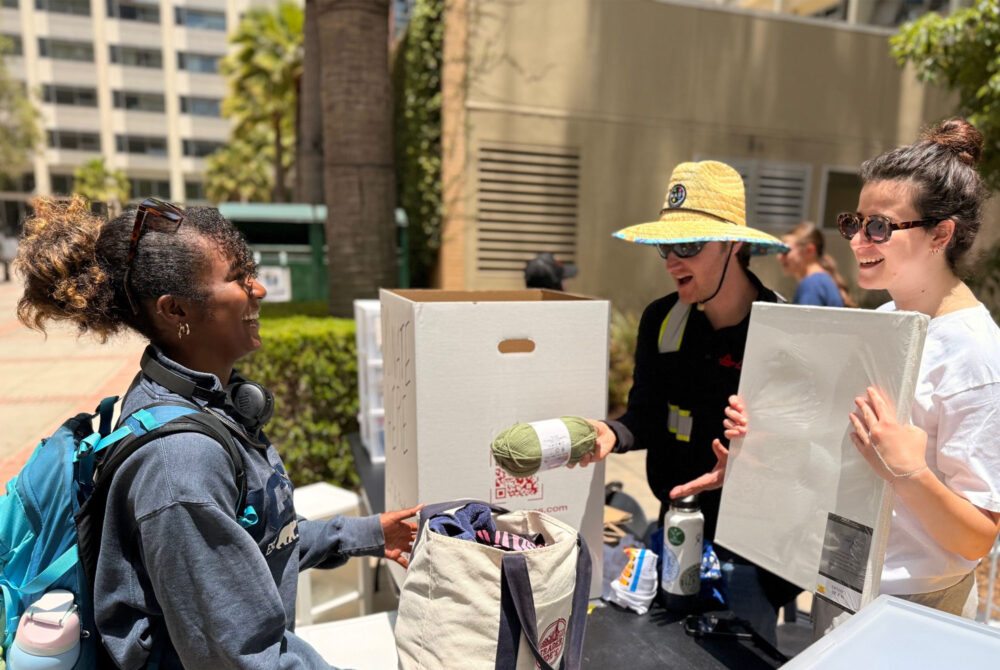
In 2025 the fires in LA County posed immense challenges for the UCLA community.
Acts of kindness kept the community connected, and UCLA researchers provided soil testing for impacted residents, conducted air quality monitoring and contributed their expertise for resilient recovery as part of an independent Blue Ribbon Commission. UCLA continues to deepen engagement with Los Angeles, including developing a Latino Climate and Health Dashboard, launching a new partnership with the Port of LA and teaming up with USC and civic partners to cool the region through ShadeLA.
Read More about Sustainability at UCLA
Students and staff work together at UCLA to recover and distribute food and supplies through the basic needs program and surplus programs like Sustainable Move Out. The top-rated campus for dining in the nation, UCLA fosters collaboration among researchers and chefs to understand how food choices can impact the Earth and develop new healthy and sustainable menus. Students and staff also collaborate on applied campus research through the Sustainability Action Research program, with projects this year ranging from developing sustainable audiovisual solutions to tracking native wildlife on campus. UCLA continues to lead in biodiversity and joined the California delegation to COP16. The Westwood campus became the first campus in California to receive a Gold level Green Grounds Certification for an ecological approach to landscape.
During Earth Month 2025, UCLA reflected on over 50 years of leadership in sustainability, from one of the first environmental studies programs in the nation to a massive multidisciplinary effort that stretches across schools, departments and units.

Stories
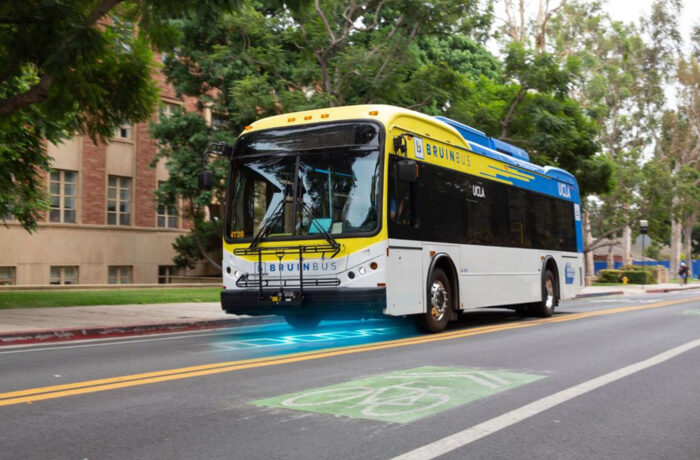

UCLA Receives Nearly $20 Million for Electric Transit Projects
The award includes funds for the expansion of UCLA’s BruinBus fleet and its expansion to 100% electric. The grant will also fund California’s first electric road charging system. Inductive charging coils will be installed at UCLA, allowing electric passenger shuttles and heavy-duty buses to charge while in motion.
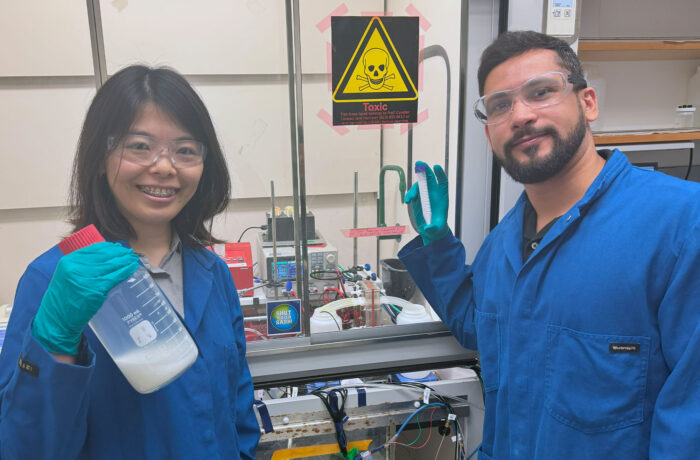
UCLA Engineers Develop Scalable Process to Decarbonize Cement Production
Researchers from UCLA’s Institute for Carbon Management have developed a new method, called ZeroCAL for zero carbon lime, that could eliminate nearly all of the carbon dioxide emitted during the process of cement production, which accounts for about 8% of global atmospheric CO2 emissions.
EMISSIONS
*Methodological changes in scope 3 accounting introduced beginning in 2019
**90% direct reduction of total emissions from 2019 levels with residual emissions negated by carbon removal
UCLA’s overall emissions increased in 2024 due to a major project at the cogeneration plant that required the shutdown of one of the engines for replacement. While the plant was offline, UCLA had to purchase higher-emissions electricity and rely on a less efficient auxiliary boiler. When fully operational, the new engines will reduce emissions and water use.
ENERGY – RENEWABLE ENERGY USE
ENERGY USE INTENSITY (EUI)
UCLA saw a decrease in its EUI in the calendar year 2024.
FOOD
of food and beverage purchases met sustainability criteria ($4.4M)
of food and beverage purchases were plant-based ($14.1M)
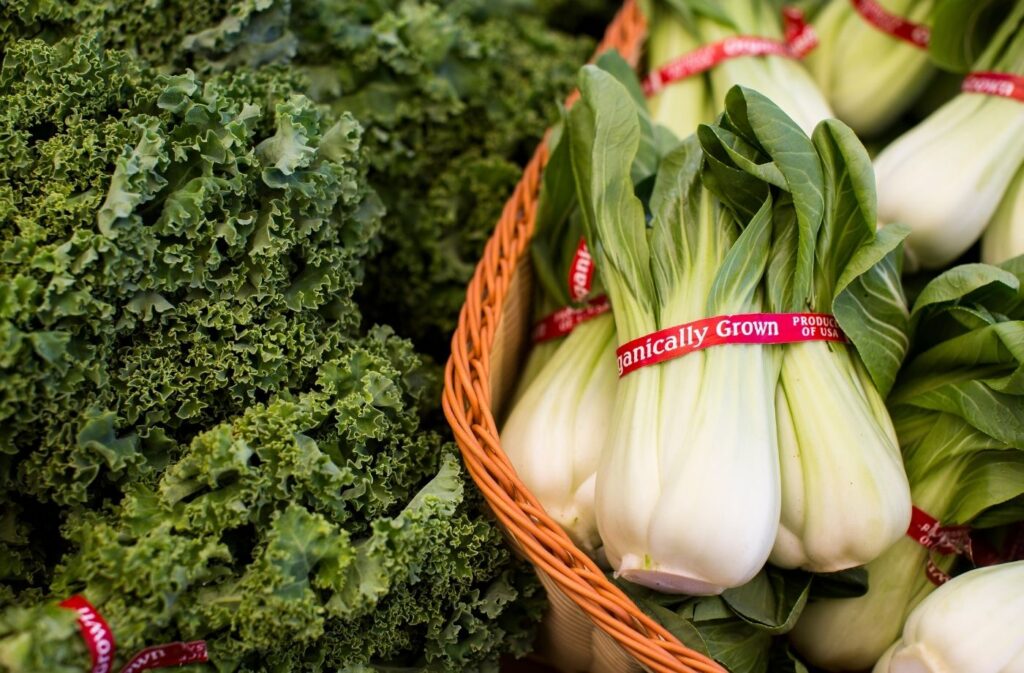
UCLA Dining’s sustainable spend percentage declined due to fiscal challenges, supply constraints and changes in the definition of sustainable food in the Advancement of Sustainability in Higher Education STARS program 3.0. At the same time, Dining is reducing animal protein purchases to prioritize whole-food, plant-based protein options.
Green building
UCLA’s portfolio expanded to 68 LEED certifications by adding four in fiscal year 2024–25: the Platinum-certified renovation of Paul Revere Williams’ LaKretz Botany Building and Gold-certified renovations of three medical facilities — Rosenfeld Hall, the Medical Plaza 100 MRI Suite and the Center for Advanced Biotherapies. UCLA was ranked fourth internationally in Green Building and Operations for 2024 by the Association for the Advancement of Sustainability in Higher Education STARS program.
18 Platinum, 38 Gold and 12 Silver
Total number of LEED certifications
Healthy Vending

healthy vending spend on food ($141K)

healthy vending spend on beverages ($424K)
Healthy vending is defined as meeting UC’s Healthy Vending Guidelines. Data is from 2023–24.
During fiscal year 2023–24, UCLA’s Vending Services department fully transitioned all beverages from plastic bottles to aluminum cans. Additionally, the department started to increase the displayed selection of healthier items inside the vending machines, which in 2023–24 represented 64% of beverages and 24% of snacks.
procurement
The University reports on green spend, as defined in the Sustainable Procurement Guidelines, and reached out to suppliers for spend data in four product categories for this year’s report.

green spend on electronics (67%)

green spend on indoor office furniture (87%)

green spend on cleaning supplies (54%)

green spend on office supplies (16%)
Green spend is defined as meeting preferred or minimum criteria in UC’s Sustainable Procurement Guidelines.
Suppliers reporting: Electronics (12), Furniture (6), Cleaning supplies (5), Office supplies (5).
UC Systemwide Spend Analytics category data provided by CalUSource.
Sustainable Building & Laboratory Operations

total assessed green laboratories
After several years of dormancy, UCLA relaunched the Green Labs program in spring 2025 with a pilot of an Ultra-Low Temperature Freezer Sustainability Certification badge. Additional topical badges are being rolled out in fall 2025.
Transportation
While the UCLA population has increased by almost 10,000 students, faculty and staff, automobile commutes declined in 2024, according to UCLA Transportation’s State of the Commute 2024 report. UCLA employees have one of the highest zero-emission-vehicle commute rates of any U.S. college or university. Close to 19,000 transit U-Passes were distributed to undergraduates, with 35% of student residents reporting using transit much more often than before.

of students and employees are utilizing sustainable commuting methods

of all vehicles and 100% of all vehicles acquired in 2025 were sustainable vehicles*
44%
of the fleet consists of sustainable vehicles*

EV charging ports
Sustainable vehicles are defined as electric (zero-emission), plug-in hybrid or clean transportation fuel
WATER
*Based on a 3-year average of fiscal years 2005-08
**2025 goal is a 36% reduction from baseline.
Includes UCLA Health
While UCLA’s water use reduction is significant at over 30% from the baseline, growth has still outpaced conservation, resulting in a reduction that falls short of the 36% target. The per capita normalization does not fully capture growth as much of the water use at UCLA is for building operations rather than population driven. However, the cogeneration engine replacement project that is underway will result in significant water savings next year.
ZERO WASTE – GENERATION
*These numbers might include a small amount of incineration that is being phased out.
Overall waste created by daily community members at UCLA dropped by 422 tons from the 2023–24 fiscal year to 2024–25. This feeds into the campus’s goal of reducing the amount of waste produced by each person on site per day. UCLA’s daily waste creation for the 2024–25 year was at 0.91 pounds per person per day, surpassing its goal of 1.07 pounds per person per day by 2025.
ZERO WASTE – DIVERsion
*Waste incineration was counted as diversion prior to July 2022.
The waste diversion for UCLA, without construction and demolition, rose from 52% in the 2023–24 fiscal year to 55% in 2024–25. This number is the highest diversion rate for UCLA since the 2015–16 baseline year. This is likely attributed to organics streams becoming available at some University Apartment locations, the increase in areas with food service providing sorting and space for large organic waste such as pizza boxes, as well as the right sizing of bins to ensure adequate space for divertable material.
Single-Use Plastics Phase-Out
Complete Phase-out*
- Beverage bottles (UC dining facilities)
- Beverage bottles (vending machines)
Partial Phase-out
- Plastic bags
- Foodware (UC dining facilities)
- Foodware (third-party dining facilities)
Starting Soon
- N/A
*Complete phase-out of single-use plastics may include exemptions where reasonable alternatives to plastic do not exist.
The UCLA campus has food service operations managed by UCLA Dining, Associated Students of UCLA (ASUCLA) and third-party food operators. Leased/third-party food facilities have eliminated some single-use plastic items, and UCLA Dining and ASUCLA have made significant progress in phasing out single-use plastics. This year, ASUCLA Restaurants innovated a reusable foodware option at their Greenhouse buffet location, where guests choose between a compostable fiber bowl and a reusable bowl that is borrowed free of charge if returned to a designated QR code-enabled bin for washing within five days.
Awards
UCLA became the first campus in California to achieve a Gold level Green Grounds certification. The campus was also honored with a 2025 Sustainability Award for Energy Efficiency from the Los Angeles Department of Water and Power. UCLA was ranked 4th internationally in Green Building and Operations for 2024 by the Association for the Advancement of Sustainability in Higher Education STARS program.
A full list of awards is featured on the UC Office of the President’s website.