 Sustainability Annual Report 2025
Since completing the Clean Energy Master Plan, UCSB has continued to make progress on planning for building electrification by launching the C·CHANGE project.
A detailed project program to electrify the main campus was completed in the fall of 2025, as was the first conversion of an existing building to all-electric. While efforts to reduce scope 1 emissions continue, UCSB has also successfully reduced scope 3 commuting emissions, which declined significantly for the second consecutive year, dropping 17% below 2019 levels. Per capita water use and waste generation also declined.
Read More about Sustainability at UC Santa Barbara
UCSB continues to increase the number of LEED projects on campus, receiving LEED Gold for Homes certification in June 2025 for Ocean Walk Phases 4 & 5, a public-private partnership that includes 70 new faculty homes.
UCSB also launched in fall 2025 the Greti U. Croft Center for Undergraduate Environmental Leadership (CUEL), which supports undergraduate students in transition from classroom to career through training opportunities and career resources. One of the programs run by CUEL is the Environmental Leadership Incubator (ELI), a nine-month program that supports student-initiated projects on and off campus. Through a 2024/2025 ELI project, two students launched FLOW (Facilitating Laboratory Optimization & Waste) to expand lab recycling. They worked with the administrative staff and lab managers to improve lab recycling. Their efforts included providing updated laboratory-specific signage and forming a no-cost partnership with Art From Scrap to divert non-recyclable materials for reuse. The UCSB Art From Scrap program is being piloted in two locations, Elings Hall and the Marine Science Building.

Stories
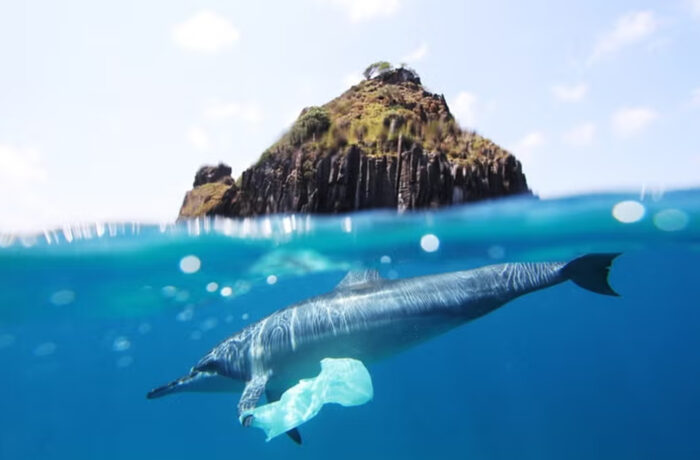

A New Study in Science Maps Out a Comprehensive Plan to Eliminate Plastic Pollution by 2050
UCSB Researchers found that if policymakers adopted four policies, plastic pollution could be reduced by 91%. “The four high-impact policies that surfaced in this study include: requiring that new products be made with 40% post-consumer recycled plastic; capping new plastic production at 2020 levels; investing significantly in expanding waste management infrastructure, especially in lower-income parts of the world; and implementing a small fee on plastic packaging.” The study was released ahead of the United Nations (UN) international treaty to combat plastic pollution.
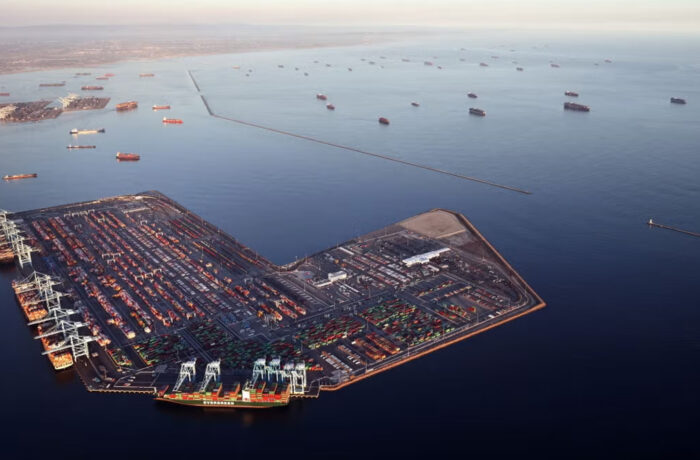
A Cheap and Easy Potential Solution for Lowering Carbon Emissions in Maritime Shipping
Scientists at the Benioff Ocean Science Laboratory (BOSL) at UCSB found that maritime greenhouse gas emissions can be reduced by 16–24% by adopting a new digital queueing system at ports that prevents congestion. According to Douglas McCauley, marine ecologist and director of BOSL, “Without needing to ‘hurry up and wait’ to secure their spot in line, ships are saving fuel by traveling at slower, more efficient speeds.”
EMISSIONS
*Methodological changes in scope 3 accounting introduced beginning in 2019
**90% direct reduction of total emissions from 2019 levels with residual emissions negated by carbon removal
In comparison to calendar year 2024, scope 1 and 2 emissions remained relatively stable. Emissions from commuting, a segment of scope 3 emissions, declined significantly for the second year in a row, falling 9% below 2023 levels and 17% below 2019 levels.
ENERGY – RENEWABLE ENERGY USE
ENERGY USE INTENSITY (EUI)
UC Santa Barbara saw a decrease in its EUI in the calendar year 2024.
FOOD
of food and beverage purchases met sustainability criteria ($1.6M)
of food and beverage purchases were plant-based ($5.7M)
For the first year, Maetadata conducted a comprehensive analysis of UCSB’s food spending, which led to some shifts in percentage breakdowns. One of the most notable changes was an increase in the spend on plant-based food. There was also a slight increase in spend on sustainable food and beverage options. Previous analyses were more conservative, but Maetadata’s advanced tools and insights provide a more accurate picture.
Green building
A public-private partnership, Ocean Walk Phases 4 & 5, which include 70 new faculty homes, received LEED Gold for Homes certification in June 2025. UCSB is converting an existing building, Environmental Health & Safety, to all-electric. The project represents the first such transition undertaken by the campus and will be complete by the end of 2025. UC Santa Barbara has not built any new parking lots in years and therefore has not pursued Parksmart certification.
16 Platinum, 43 Gold, 15 Silver and 2 Certified
Total number of LEED certifications
Healthy Vending

healthy vending spend on food ($56K)

healthy vending spend on beverages ($73K)
Healthy vending is defined as meeting UC’s Healthy Vending Guidelines. Data is from 2023–24.
Fiscal year 2023–24 represents the first year UCSB is reporting healthy vending data to the UC system. UCSB will be employing a student this year to help raise awareness on campus of healthy choices.
procurement
The University reports on green spend, as defined in the Sustainable Procurement Guidelines, and reached out to suppliers for spend data in four product categories for this year’s report.

green spend on electronics (61%)

green spend on indoor office furniture (85%)

green spend on cleaning supplies (58%)

green spend on office supplies (19%)
Green spend is defined as meeting preferred or minimum criteria in UC’s Sustainable Procurement Guidelines.
Suppliers reporting: Electronics (10), Furniture (6), Cleaning supplies (5), Office supplies (4).
UC Systemwide Spend Analytics category data provided by CalUSource.
Sustainable Building & Laboratory Operations

total assessed green laboratories
Last year, UC Santa Barbara’s Green Labs team certified two labs and provided thousands of dollars in incentives for freezers, fridges and other sustainable lab equipment.
Transportation
Eighty-three percent of students, staff and faculty commute to and from campus using sustainable commuting options. Commute mode split stayed relatively the same compared with the previous year; however, distance traveled decreased slightly.

of students and employees are utilizing sustainable commuting methods

of all vehicles and 100% of sedans and minivans acquired in 2025 were sustainable vehicles*
16%
of the fleet consists of sustainable vehicles*

EV charging ports
Sustainable vehicles are defined as electric (zero-emission), plug-in hybrid or clean transportation fuel
WATER
*Based on a 3-year average of fiscal years 2005-08
**2025 goal is a 36% reduction from baseline.
While UCSB did not meet the growth-adjusted potable water consumption reduction goal of 36% by 2025, water usage per person fell to approximately 22% below the 2005–2008 baseline, up from about 19% the previous year. Total water usage stayed relatively stable despite population growth.
ZERO WASTE – GENERATION
*These numbers might include a small amount of incineration that is being phased out.
**In 2021, waste generation per weighted campus user spiked due to pandemic-related closures as base-level operations continued but the number of users on campus decreased.
Total waste generation decreased in fiscal year 2024–25 compared with fiscal year 2023–24. Additionally, pounds per person per day also reduced from 1.3 to 1.2 in 2024–25. This puts the campus at a 22% reduction in waste generation from 2015–16 levels, falling slightly short of the 2025 goal of 25% below fiscal year 2015–16 levels.
ZERO WASTE – DIVERsion
*Waste incineration was counted as diversion prior to July 2022.
UC Santa Barbara’s waste diversion rate, without construction and demolition, increased from 63% in fiscal year 2023–24 to 68% in fiscal year 2024–25. Better data collection of recycled and composted items was one of the primary reasons for the increase in waste diversion.
Single-Use Plastics Phase-Out
Complete Phase-out*
- Plastic bags
Partial Phase-out
- Foodware (UC dining facilities)
- Foodware (third-party dining facilities)
- Beverage bottles (UC dining facilities)
- Beverage bottles (vending machines)
Starting Soon
- N/A
*Complete phase-out of single-use plastics may include exemptions where reasonable alternatives to plastic do not exist.
UCSB made changes to the containers used at Ortega Takeout. Nearly all of the containers, condiments, cups and lids are now made from bagasse, a compostable material made from sugarcane. Only a few items — utensils, clear lids for salad containers — are made from PLA, a bioplastic. In retail operations, UCSB has transitioned to bagasse hot and cold cups and lids. Wherever possible, the switch has been made to bagasse to-go containers, condiments and lids. UCSB is still evaluating which items can be transitioned to plastic-free packaging and exploring changes to improve vending machine options.
Awards
UCSB received 5th in EPEAT’s Purchaser Award for Sustainable Electronics Leadership.
A full list of awards is featured on the UC Office of the President’s website.