 Sustainability Annual Report 2025
UC San Diego Health is advancing holistic health care by integrating sustainability into its mission to create a healthier world. Recognized among the Top 25 hospitals nationwide for environmental excellence, the system is working toward a fossil-free future by 2045, reinforcing its commitment to climate-smart care and health equity.
In late 2023, UC San Diego Health expanded access to care in eastern San Diego with the acquisition of East Campus, a 302-bed facility. This marks the first year East Campus data is included in the annual report.
Read More about Sustainability at UC San Diego Health
Redevelopment of the Hillcrest Medical Campus continues, highlighted by the July 2025 opening of the McGrath Outpatient Pavilion, which reduces carbon intensity by over 90%.
A survey revealed that 85% of patients prefer care from sustainability-committed organizations, affirming the link between environmental stewardship and patient-centered care.
The Green Certification Program empowers departments to adopt sustainable practices that benefit both patient and environmental health. Recent efforts include hydration stations for vulnerable populations, waste audits, paperless systems and reusable alternatives to single-use items.
UC San Diego Health is also building climate resilience through Clinician Toolkits addressing extreme heat, flooding and wildfire smoke. Team members contributed to the federal Climate Resilience for Healthcare Toolkit, supporting others in their work.
Environmental responsibility is embedded across UC San Diego Health’s Anchor Institution Mission. In collaboration with the Healthcare Anchor Network, the system advances its role as a community anchor via three pillars: Workforce, Purchasing and Environmental Impact.
These initiatives reflect a unified vision for healthier people, communities and planet.

Stories
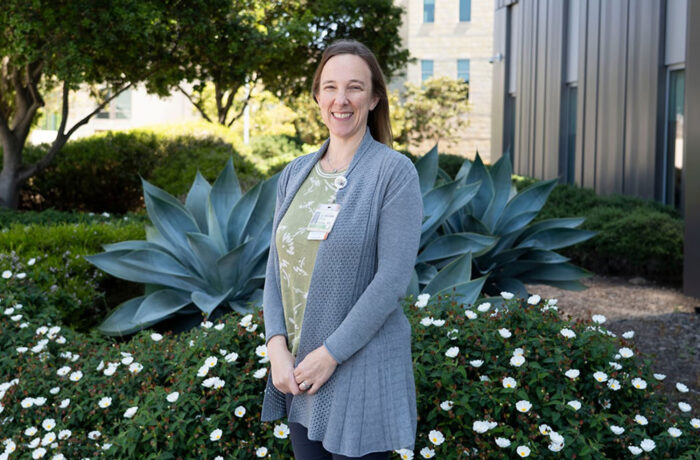

Where Climate Meets Care: Dr. Shira Abeles Champions Sustainable Health at UC San Diego
Dr. Shira Abeles, UC San Diego Health’s medical director of sustainability, champions the connection between environmental and human health. She is bringing attention to how pollution, heat and ecological decline worsen health outcomes and deepen inequities. By integrating climate action into clinical care, UC San Diego Health is advancing a model of care that protects both people and the planet.

Cool Food, Big Impact: UC San Diego Health Slashes Emissions and Costs Through Sustainable Dining
This year, Practice Greenhealth featured UC San Diego Health for its progress toward the Coolfood Pledge 2030 goal. In just six years, the organization reduced greenhouse gas emissions from food purchasing by 35% per plate, nearly reaching the 38% target. Through increased plant-based offerings, strategic menu language, operational changes and staff engagement, UC San Diego Health also achieved approximately $60,000 in annual savings while advancing its commitment to sustainability.
FOOD

of food and beverage purchases met sustainability criteria ($2.0M)
of food and beverage purchases were plant-based ($2.1M)
UC San Diego Health supports healthier, eco-friendly food by choosing sustainable, organic, unprocessed and local options and more plant-based meals. Over 12,000 pounds of food were donated to local nonprofits. A new vendor improved meat sourcing, including antibiotic-free beef.
Healthy Vending
UC San Diego Health began tracking healthy food and beverage purchases in vending machines for the first time this year. Despite third-party management, nearly 30% of beverage spending met healthy vending standards. Efforts to phase out single-use plastic bottles are also underway, aligning vending operations with broader sustainability and wellness goals. These early results offer a solid baseline for measuring progress and shaping future strategies in nutrition and waste reduction.

healthy vending spend on food ($30K)

healthy vending spend on beverages ($1K)
Healthy vending is defined as meeting UC’s Healthy Vending Guidelines. Data is from 2023–24.
procurement

green spend on appliances and IT hardware (100%)

green spend on office supplies (22%)

cost savings through medical device reprocessing (representing 37,570 pounds of waste avoided)
Green spend is defined as meeting preferred or minimum criteria in UC’s Sustainable Procurement Guidelines.
Suppliers reporting: Appliances and IT hardware (6), Office supplies (1).
“Reprocessing” refers to the FDA-approved re-manufacturing process carried out on a used device, including cleaning, disinfection, sterilization, testing and related procedures to allow its safe reuse. This process allows health facilities to reduce their reliance on single-use devices.
UC San Diego Health advanced sustainable procurement by expanding partnerships and reprocessing single-use medical devices, saving over $1.3 million and supporting a circular economy. The organization also prioritized environmentally responsible purchasing, earning the EPEAT Purchaser Award for the third consecutive year. Nearly all electronics and appliances purchased were EPEAT-certified and met Energy Star standards, reflecting UC San Diego Health’s ongoing commitment to reducing environmental impact through thoughtful sourcing and operational practices.
Transportation
UC San Diego Health is served by multiple mass transit options, including light rail, shuttles, buses and the Coaster train. To encourage sustainable commuting, staff receive discounted transit access. Currently, 38% of the fleet consists of zero-emission, plug-in hybrid or clean fuel vehicles. To further support staff and visitors, electric vehicle charging stations are available in all public parking garages, with extended-time spaces designated for employees working 12-hour hospital shifts.

EV charging ports

of all vehicles acquired in 2025 were sustainable vehicles*
38%
of the fleet consists of sustainable vehicles*
*Sustainable vehicles are defined as electric (zero-emission), plug-in hybrid or clean transportation fuel.
Data from Hillcrest Medical Center. Jacobs Medical Center data reported by UCSD academic campus.
ZERO WASTE – GENERATION
*Per capita figures are calculated using Adjusted Patient Day (APD).
**Data provided if not counted in other waste streams.
UC San Diego Health generated less than 23 pounds of waste per adjusted patient day, exceeding its 2025 goal of 25 pounds and nearing the 2030 target of 20 pounds. This year, the organization launched a medical supply donation program to repurpose unused items and expanded operating room recycling pilots to include clean packaging and soft plastics. Hospitals began composting meal scraps and leftover food from patient trays, diverting materials to vermicomposting facilities, which boosted organic waste recycling by 18%. Data collection is ongoing, and the full impact of these efforts will be reflected in future reports.
Single-Use Plastics Phase-Out
Complete Phase-out*
- Plastic bags
- Foodware (UC dining facilities)
- Foodware (third-party dining facilities)
- Beverage bottles (UC dining facilities)
Partial Phase-out
- Beverage bottles (vending machines)
Starting Soon
- N/A
*Complete phase-out of single-use plastics may include exemptions where reasonable alternatives to plastic do not exist.
In alignment with systemwide policy, UC San Diego Health has significantly reduced single-use plastics across its retail and food service operations. Key initiatives include switching to paper bags and plant-based foodware, expanding refillable hydration stations and transitioning beverage containers from plastic to aluminum. The health system is also working with third-party vending providers to eliminate single-use plastic bottles, further advancing its goal of fully removing single-use plastics from these areas.
Awards
Reflecting UC San Diego Health’s mission to advance human and environmental well-being, Jacobs Medical Center and Hillcrest Medical Center were named among the Top 25 hospitals nationwide for environmental excellence by Practice Greenhealth. Each received a Circle of Excellence award, an esteemed national recognition, placing them in the top 10 for achievements in Transportation and Green Building. These honors emphasize the organization’s commitment to integrating sustainability into daily operations, reducing environmental impact while supporting the health of patients, staff and the broader community.
A full list of awards is featured on the UC Office of the President’s website.

Combined Data
Progress on the following policy areas for this Health System is reported by the campus location: