 Sustainability Annual Report 2025
Leveraging interdisciplinary scholarship, community engagement and collaboration, the UC system fosters innovation in addressing the climate challenge on local, regional and global scales.
Research
As the leading public research university in the most populous state in the U.S., the University of California continues to advance science-based mitigation and adaptation efforts to protect people and nature, prepare for the impacts of climate change and ensure energy security. The second year of state-funded climate action research grants saw continued progress by faculty researchers helping California communities understand, fight and adapt to climate change, highlighted by a conference in Sacramento with grantees, state agencies and community partners. Administered by UC, the state-funded California Firefighter Cancer Prevention and Research Program awarded eight grants totaling $6 million in 2024 to advance research on reducing cancer and cancer risk among firefighters. California’s Fifth Climate Change Assessment is co-led and supported by UC faculty and researchers serving as study authors, expert reviewers and executive editorial team leaders. The assessment contributes to understanding climate-related vulnerability throughout the state and supports on-the-ground implementation and decision-making, especially in vulnerable communities.
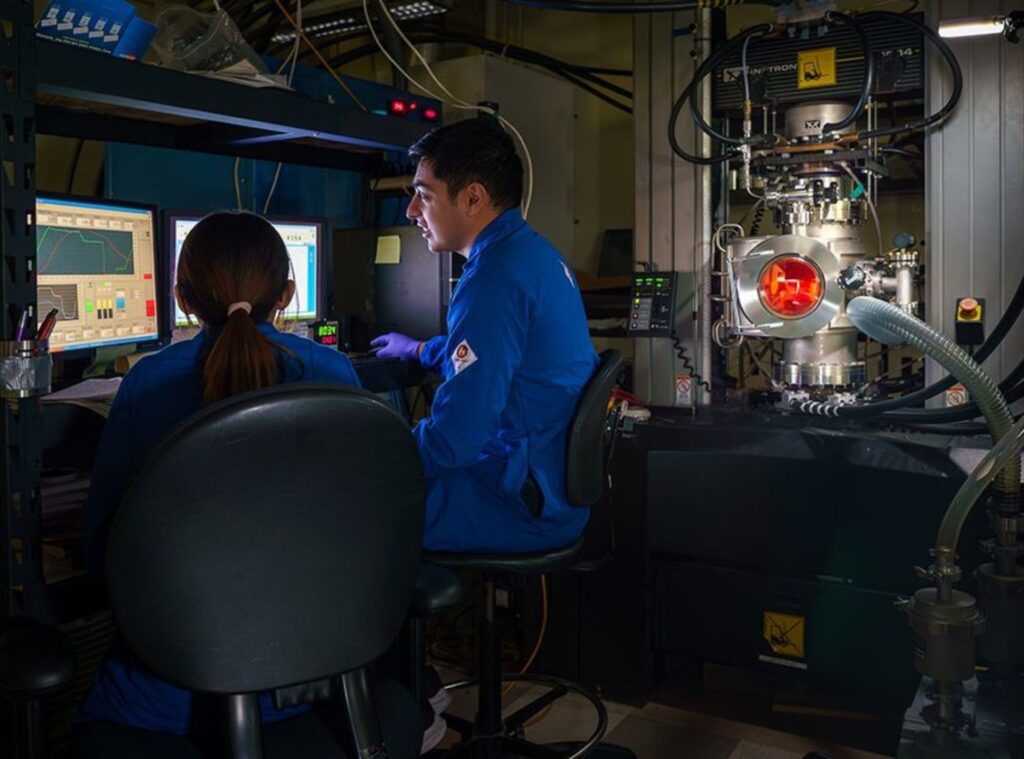
In 2024–25, UC Research Initiatives directed nearly $10 million — two-thirds of a total $15.5 million investment in Multicampus Research Programs and Initiatives — to fuel inter-institutional, interdisciplinary discovery in climate and resource-related challenges. These investments address urgent realities such as heat exposure and water scarcity, push the boundaries of sustainable agriculture through agroecological farming and cultivate the future of engagement with multidisciplinary climate action. The UC National Laboratory Fees Research Program sponsored systemwide workshops and funding opportunities that help advance solutions to environmental challenges, including fusion energy and community-engaged research in clean energy, convening researchers from UC campuses and UC-affiliated national laboratories to strengthen collaborative ties and chart new directions for next-generation energy solutions.
The Alliance for Renewable Clean Hydrogen Energy Systems (ARCHES), a public-private partnership (P3) founded by UC, entered the planning and permitting phase of its Department of Energy-funded work to build California’s renewable hydrogen economy. The UC Regents approved UC’s participation in Pacific CREST Fusion, a new P3 envisioned by a coalition of UC researchers and leaders from industry and the state, to accelerate research, development and deployment of fusion energy facilities. The Pacific CREST coalition will build on UC’s research successes and partner facilities to develop fusion energy power plants, which could provide stable, clean power to meet California’s growing energy needs and renewable energy mandates.
UC Natural Reserve System
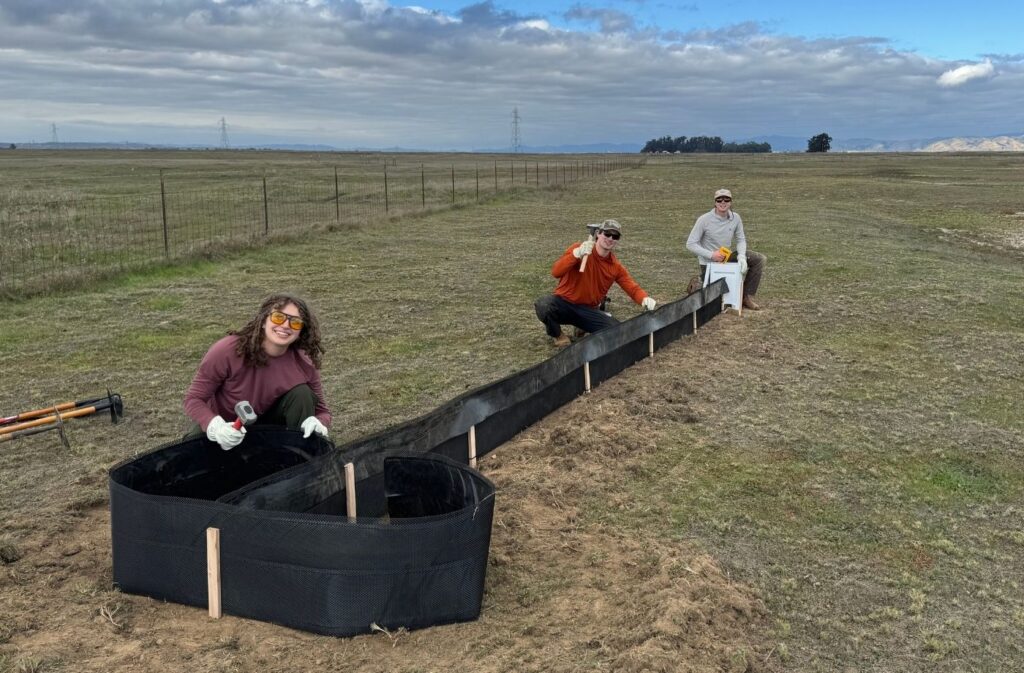
To help the state of California protect its biodiversity, the UC Natural Reserve System (UCNRS) has launched a long-term ecosystem monitoring network at dozens of its reserves across the state. Each node in the Sentinel Sites for Nature network includes a standardized set of biodiversity monitoring and weather station equipment. Camera traps and acoustic recording devices will continuously track the presence of mammals, reptiles, amphibians, bats and birds. Climate sensors will measure conditions such as air temperature, precipitation, solar radiation, soil moisture and temperature, and fuel moisture (a measure of wildfire risk). Telemetry stations tracking tagged birds, plant surveys and other methods will provide additional information about each location. Sentinel Sites for Nature data from the UCNRS and other entities will enable California to monitor shifts in wildlife populations, observe the impacts of climate change on ecosystems and evaluate the success of biodiversity protection efforts such as the state’s 30×30 commitment to conserve 30% of its lands and coastal waters by 2030. The project is supported by a $2 million grant from the California Department of Fish and Wildlife Cannabis Program.
Education
The University continued to expand its educational offerings related to climate change and sustainability last year. UC San Diego launched the Jane Teranes Climate Change Education Requirement for incoming first-year students in fall 2024. Students are now required to complete a one-quarter course designed to empower them with the knowledge and skills needed to confront the urgent global challenge of climate change.

At the systemwide level, the UC President’s Global Climate Leadership Council funded an expansion of systemwide offerings such as the Bending the Curve course platform. In the 2024–25 academic year, Bending the Curve content was offered by four UC campuses (UCLA, UC Riverside, UC San Diego and UC Santa Cruz) and universities around the world (Appalachian State University, National Taiwan University and Stockholm University). The course also expanded to six high schools in New York City, Washington, D.C., and Miami through the National Education Opportunity Network, which enables high school students from historically underserved communities to take college courses. Additionally, two organizations — One Health Workforce Academies and the Los Angeles Unified School District — have licensed the Bending the Curve content library, providing access to their networks of more than 100 universities across the globe and thousands of teachers and administrators.
In collaboration with Bending the Curve, the Center for Climate, Health and Equity (CCHE) partnered with the American Medical Association to provide continuing medical education on climate change and health. Between October 2024 and May 2025, the UC-generated curriculum was accessed by 800 health care providers. In response to the Los Angeles area wildfires, CCHE co-sponsored a psychoeducational training to provide basic skills to effectively help those impacted by wildfires with acute stress responses and co-sponsored a six-part webinar series for the UC community and the public focusing on the physical health, mental health and social impacts of wildfires, providing a blend of scientific information and practical skills, and highlighting environmental justice issues. Additionally, the UC Center for Climate Justice continued expanding and adapting its materials to help students understand the growing climate justice field, also partnering with the National Education Opportunity Network to provide more than 220 high school students with access to their courses.
Students
The University of California’s environmental sustainability goals are rooted in student activism, beginning more than two decades ago when students encouraged the Regents to approve UC’s first green building and clean energy policy, which they did in 2003.
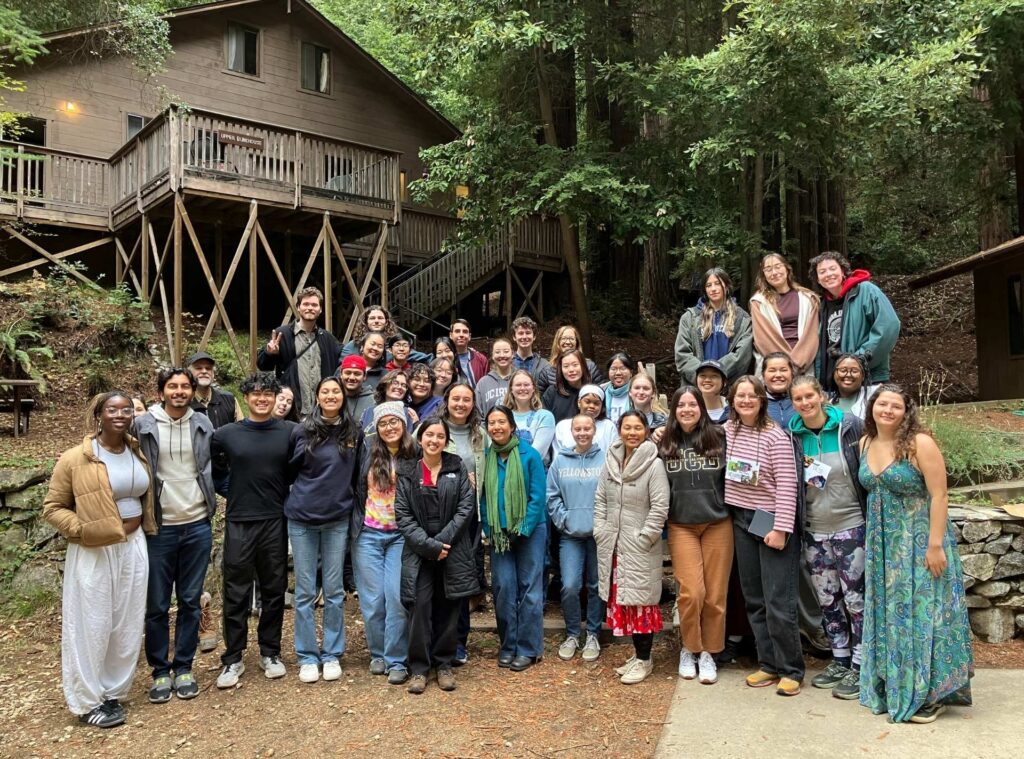
The UC Office of the President oversees the Bonnie Reiss Leading on Climate Student Fellowship Program. The program funds student-generated research and operational and engagement projects across all UC locations. Student fellows study climate- and food-related challenges, engage the UC community in climate action and sustainable food systems, and implement solutions at UC locations and in neighboring communities.
Fellows meet throughout the year to develop projects, identify solutions to shared challenges, build leadership skills and cultivate systems of peer support. Many fellows from the 2024–25 cohort conducted projects reflecting the annual report’s theme: Sustainable innovations begin here. For example, Kea Rutherford, a UC Agriculture and Natural Resources fellow, developed an open-access software package that simplifies the carbon accounting process in California. By the end of the year, the analytic software had been installed more than 3,400 times and used by CAL Fire, the U.S. Forest Service, forest managers and other research labs. Fong Clement Vo at UC San Diego Health conducted a spatial analysis combining public health and climate risk data to identify communities that are most vulnerable to climate change. This mapping initiative can be used to inform targeted outreach to high-risk, high-density hotspots.
Leading on Climate Fellows
annual fellows in 2024–25
total fellows since 2014
Academic Senate
The University of California’s Academic Senate carries out shared governance responsibilities established by the Regents and relating to academic matters. Academic Senate divisions continue to advance climate action and education, as the highlights below illustrate.