 Sustainability Annual Report 2025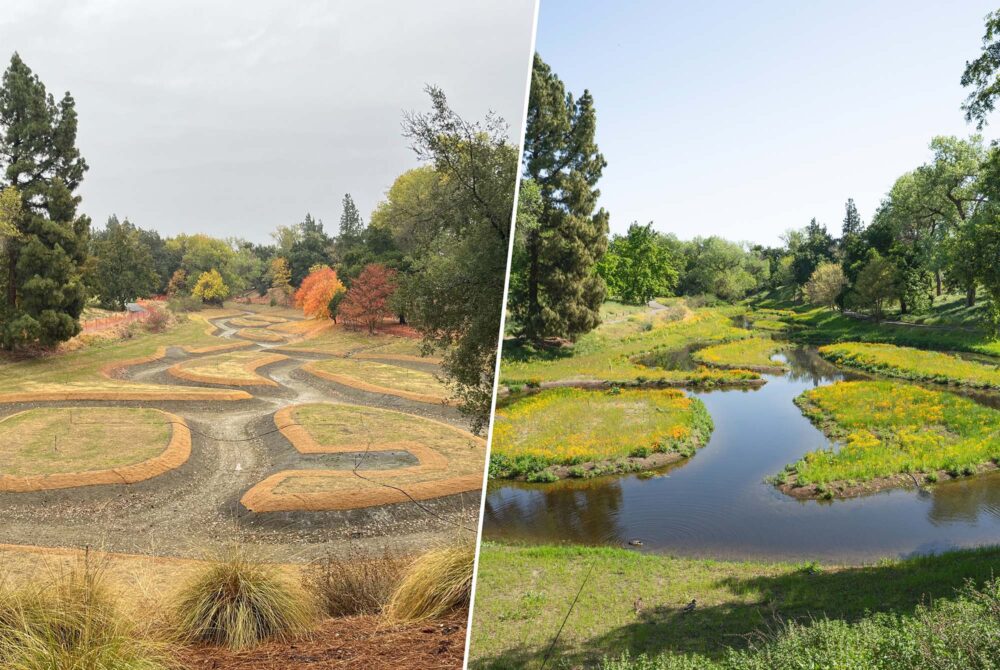
UC Davis established ambitious greenhouse gas reduction targets and strengthened campus resiliency through projects such as enhancements to the Arboretum Waterway, utilities control upgrades that will save 50,000 gallons of water each day and Phase 2 of the Big Shift.
The campus welcomed Eric O’Brien as the new sustainability director and launched a forward-looking community-centered vision for a sustainable transportation plan. Unitrans completed the first phase of its electric bus transition — making a third of its fleet zero emission.
Read More about Sustainability at UC Davis
Sustainable consumption is advancing through organic, farmer-owned coffee on campus, research for more sustainable coffee and a new beverage partnership phasing out plastic bottles. Custodial services adopted a new model, empowering the campus community to build waste sorting knowledge while reducing single-use waste liners.
Students continue to steer progress with waste audits and scope 3 emissions calculations revealing campus waste patterns. “Sustainably UC Davis,” a student intern-initiated YouTube series, explored campus sustainability. The Redwood SEED Scholars program graduated its first class of students, supporting the United Nations Sustainable Development Goals (SDGs).
Both the campus and community continue to serve as living laboratories, with students designing an innovative vermifilter wastewater pretreatment project for the teaching winery of the Robert Mondavi Institute, developing the first environmental justice framework for incorporation into the Davis City Council’s General Plan update in Environmental Justice and Community Development, and contributing to the first-ever Voluntary Local Review on the SDGs for Sacramento, a partnership between UC Davis and the City of Sacramento.

Stories
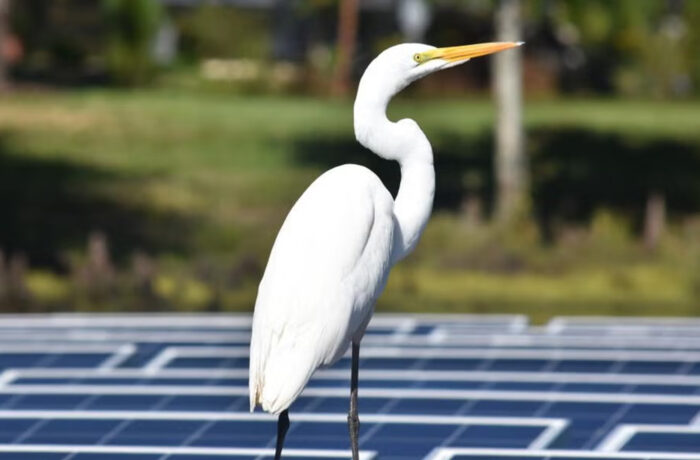

Helping Birds and Floating Solar Energy Coexist
Researchers from the UC Davis Wild Energy Center studied how waterbirds — like herons, cormorants and phoebes — interact with floating solar photovoltaic systems (“floatovoltaics”) installed over reservoirs, irrigation ponds and wastewater facilities. Scientists observed largely positive waterbird behaviors, such as perching and nesting, and benefits to people, including water evaporation reduction, while recognizing the importance of designing these systems to avoid negative impacts and promote ecological benefits.
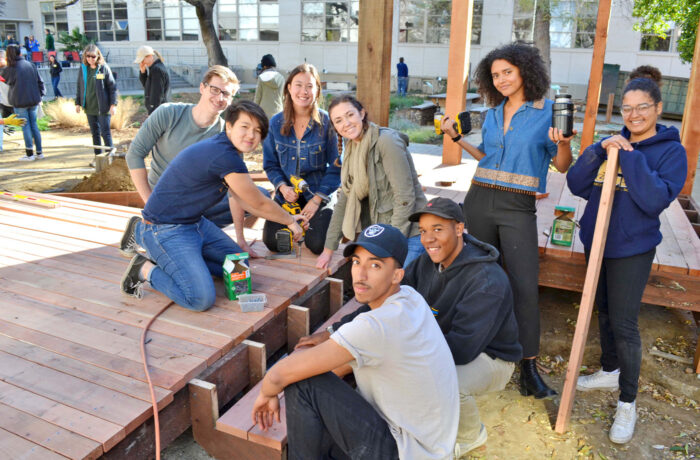
UC Davis GATEways Project: Where Nature Meets Learning
The GATEways Project (Gardens, Arts, and The Environment) at UC Davis transforms the campus into a living laboratory where student-driven Learning by Leading internships empower interns to design, maintain and interpret themed gardens — such as the Native American Contemplative Garden, California Rock Garden, Landscape Lab, Hummingbird Garden and Climate Adaptation Living Lab — fostering hands-on education, public engagement and collaborative environmental stewardship.
EMISSIONS
*Methodological changes in scope 3 accounting introduced beginning in 2019
**90% direct reduction of total emissions from 2019 levels with residual emissions negated by carbon removal
UC Davis’s scope 1 and 2 emissions remained consistent with previous years. The Davis campus saw gas savings associated with the first phase of the Big Shift project due to inefficient and leaky steam pipes being replaced with new hot water pipes. While on-site solar electricity production was lower than the previous year due to system maintenance issues, receipt of more hydropower offset the difference. UC Davis began tracking scope 3 emissions associated with car rentals, personal auto travel for business and solid waste generation.
ENERGY – RENEWABLE ENERGY USE
ENERGY USE INTENSITY (EUI)
Energy optimization projects contributed to the decrease in UC Davis’s EUI in 2024.
FOOD
of food and beverage purchases met sustainability criteria ($3.8M)
of food and beverage purchases were plant-based ($7.7M)
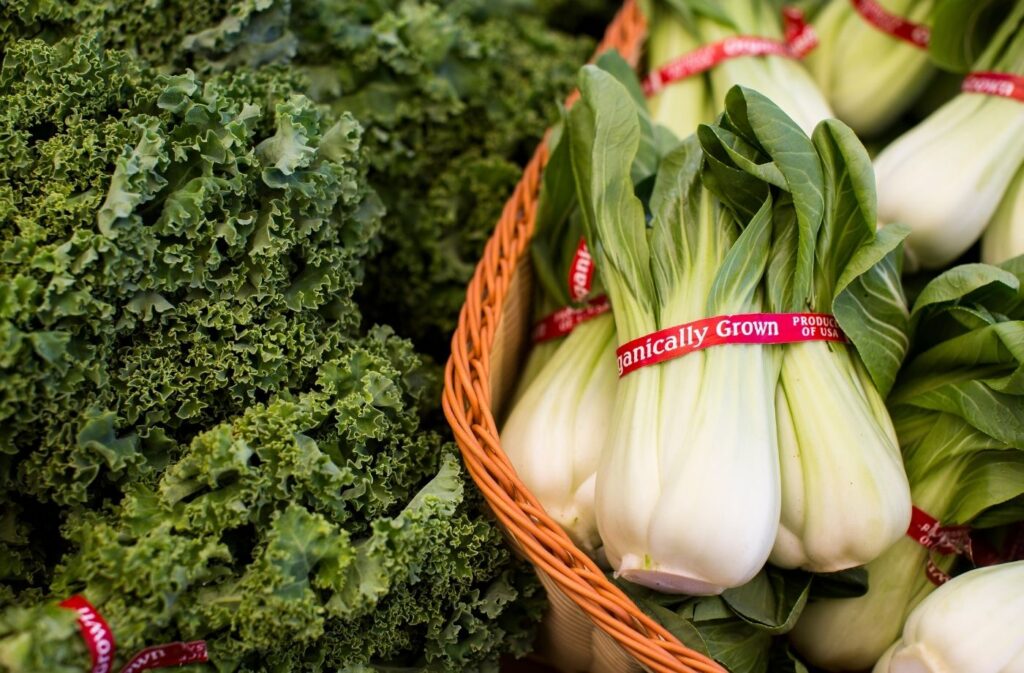
UC Davis spent approximately $3.8 million on sustainable food and beverages this year, an 8% increase from the previous year. Dining Services increased spending on sustainable meat products for beef, chicken and fish through partnerships with Cream Co. Meat, Mary’s Chicken and Real Good Fish. Dining Services has been expanding spend with Clover Dairy organic milk products and Peet’s organic, Rainforest Alliance or Bird Friendly coffee. The student-run Coffee House has also increased sustainable spend on coffee with its new vendor, Pachamama Coffee Cooperative.
Green building
The UC Davis main campus constructed two new Gold-certified LEED buildings, Shasta Hall and Edwards Family Athletics Center, and one Silver-certified LEED building, Orchard Park Amenity Building. The main campus has 12 occupied all-electric buildings and two under construction.
11 Platinum, 33 Gold, 9 Silver and 1 Certified
Total number of LEED certifications
Healthy Vending

healthy vending spend on beverages ($41K)
Healthy vending is defined as meeting UC’s Healthy Vending Guidelines. Data is from 2023–24.
UC Davis spent $41,000 on healthy vending beverages, 6% of total vending beverage spend. The spend includes data from Pepsi and Canteen. The campus has its own vending machines offering fresh food, for which data tracking will begin next academic year.
procurement
The University reports on green spend, as defined in the Sustainable Procurement Guidelines, and reached out to suppliers for spend data in four product categories for this year’s report.

green spend on electronics (74%)

green spend on indoor office furniture (79%)

green spend on cleaning supplies (44%)

green spend on office supplies (23%)
Green spend is defined as meeting preferred or minimum criteria in UC’s Sustainable Procurement Guidelines.
Suppliers reporting: Electronics (10), Furniture (6), Cleaning supplies (5), Office supplies (4).
UC Systemwide Spend Analytics category data provided by CalUSource.
Sustainable Building & Laboratory Operations

total assessed green laboratories
Currently, eight labs are certified through the Green Workplace program, including one that proactively recertified to achieve the highest rating. Six more certifications are in progress. The program partnered with the UC Davis Organic Chemistry Teaching Labs program manager to secure a $12,000 Green Initiative Fund grant for a pilot nitrile glove recycling program, projected to divert waste from over 5,000 students annually. Additionally, a lab coat reuse program was launched, recovering and laundering coats for redistribution through the UC Davis Bookstore.
Transportation
The 2024 UC Davis Travel Survey showed a 5% increase in single-occupancy-vehicle use by employees while student rates remained consistent with the previous year. While the measurement for the campus travel survey captured one week of commuting patterns in October, a busy time on campus for employees and students, parking meter data throughout the entire academic year suggested a significant reduction of vehicle demand. Transit use went up 5% campuswide compared with 2023 as the campus bus system, Unitrans, returned to full pre-pandemic service.

of students and employees are utilizing sustainable commuting methods
of all vehicles and 100% of sedans and minivans acquired in 2025 were sustainable vehicles*
23%
of the fleet consists of sustainable vehicles*

EV charging ports
*Sustainable vehicles are defined as electric (zero-emission), plug-in hybrid or clean transportation fuel.
WATER
*Based on a 3-year average of fiscal years 2005-08
**2025 goal is a 36% reduction from baseline.
UC Davis potable water use went down by 27 million gallons while the campus population increased by about 1,500, resulting in a 1,500 gallon per capita reduction in potable water use compared with the previous year, a 39% reduction from baseline that surpasses the 2025 water goal. Water savings occurred in campus buildings and at the Central Plant, which is using less water due to the campus shift away from a leaky steam-operated heating and cooling system to one that uses hot water.
ZERO WASTE – GENERATION
*These numbers might include a small amount of incineration that is being phased out.
**In 2021, waste generation per weighted campus user spiked due to pandemic-related closures as base-level operations continued but the number of users on campus decreased.
UC Davis generated 9,498 tons of municipal solid waste, or 1.43 pounds per person per day. Waste generation remained consistent to previous years, with 226 tons less generated in fiscal year 2024–25 compared with 2023–24. A reduction of 36% in per capita waste generation is needed to meet the 2025 goal of 0.91 pounds per person per day.
ZERO WASTE – DIVERsion
*Waste incineration was counted as diversion prior to July 2022.
UC Davis diverted 13,523 tons, or 66%, of all waste (excluding construction and demolition) in fiscal year 2024–25, a slight increase compared with 2023–24. C&D waste diversion increased this fiscal year due to several larger construction projects, such as the demolition of Solano Park Housing.
Single-Use Plastics Phase-Out
Complete Phase-out*
- Plastic bags
Partial Phase-out
- Foodware (UC dining facilities)
- Foodware (third-party dining facilities)
- Beverage bottles (UC dining facilities)
- Beverage bottles (vending machines)
Starting Soon
- N/A
*Complete phase-out of single-use plastics may include exemptions where reasonable alternatives to plastic do not exist.
The campus signed a new pouring rights contract with Pepsi requiring roughly 80% of beverages to be provided in non-single-use plastic containers. A few items, such as Naked Juice and Gatorade, are unavailable in non-plastic containers. These items will be available in sustainable packaging by 2030. UC Davis is also partnering with Polycarbin to develop circular economy solutions for lab plastics, helping the campus recycle 638 pounds of lab plastics in fiscal year 2024–25.
Awards
UC Davis maintained a Gold rating in STARS 2.2. The report is valid until 2026. For the ninth year in a row the campus was recognized as the greenest campus in North America in the 2024 UI GreenMetric World University Rankings.
A full list of awards is featured on the UC Office of the President’s website.