 Sustainability Annual Report 2025
UC Irvine continued to collaborate with campus partners this past year with the goal of improving sustainable operations.
The campus fostered relationships across departments on the topic of sustainability through engagement with the Climate Action and Adaptation Plan (CAAP), the AASHE STARS (Association for the Advancement of Sustainability in Higher Education’s Sustainability Tracking, Assessment, and Rating System) submittal, the Long Range Development Plan and a variety of other projects.
Read More about Sustainability at UC Irvine
One area of growth and success was sustainable transportation. This past year, UC Irvine reached an 84% sustainable commute rate, with walking, micromobility, transit and telecommuting as major contributors. This shift has also led to a decrease in the drive-alone rate, now down to 16%. UC Irvine also continues to be a leader in green building, with 42 LEED-certified projects. The newest additions to campus include the UCI Health Irvine Hospital, the first all-electric hospital in the nation, and the Joe C. Wen and Family Advanced Care Center. Both are anticipated to reach Platinum certification.
UC Irvine continues to evaluate decarbonization pathways while focusing on near-term greenhouse gas reductions through the replacement of fossil-fueled boilers. Climate resilience continues to be a focus as the academic campus and medical center develop adaptation strategies for the updated CAAP.

Stories

UC Irvine Leads AI Initiative to Solve Geophysical Challenges
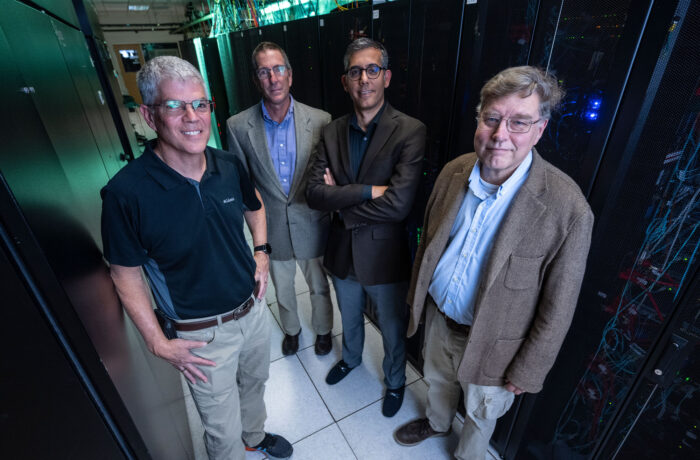
UC Irvine is leading a $6 million initiative, Geophysicist.AI, to revolutionize sustainability communication through artificial intelligence-driven geophysics. By integrating machine learning with vast real-world data, the project aims to advance clean geothermal energy, carbon sequestration and nuclear waste storage. The initiative unites experts across UC campuses and national labs, creating a novel AI ecosystem that mimics skilled geophysicists. This scalable, interdisciplinary approach highlights innovation in communicating and solving complex environmental challenges sustainably.
How Humanities Are Redefining Climate Communication
UC Irvine’s WUICAN Climate Communications Internship pioneers innovative sustainability communication by empowering humanities students to craft compelling climate narratives. Partnering with community groups, students use creative media like zines, blogs and videos to engage diverse audiences and advocate for climate justice. The program blends academic training with hands-on experience, showcasing how storytelling, Indigenous knowledge and grassroots outreach can transform climate communication. It redefines career pathways in environmental work through humanities-driven, justice-centered approaches to sustainability challenges.
EMISSIONS
*Methodological changes in scope 3 accounting introduced beginning in 2019
**90% direct reduction of total emissions from 2019 levels with residual emissions negated by carbon removal
UC Irvine saw an increase of over 20% in scope 1 emissions in 2024. This was due in part to 2023 emissions being unusually low as the campus cogeneration plant was down for over two months. This year, UC Irvine returned to normal operations and experienced a significant refrigerant leak, contributing to the elevated emissions levels.
ENERGY – RENEWABLE ENERGY USE
ENERGY USE INTENSITY (EUI)
UC Irvine’s EUI metric for calendar year 2024 was 3% greater than 2023 due to increased cogeneration activity relative to increased square footage. The campus’s EUI is still 3% below the 2024 EUI target of 119 kBtu per square foot, exceeding the 2% annual reduction goal since 2011.
FOOD
of food and beverage purchases met sustainability criteria ($2.7M)
of food and beverage purchases were plant-based ($2.3M)
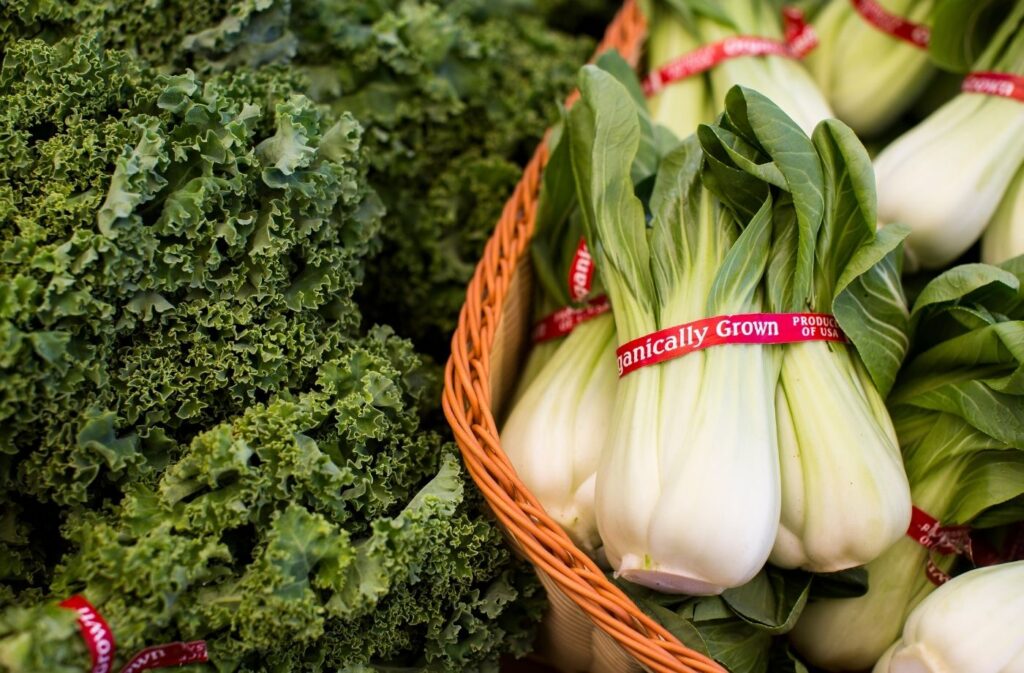
UC Irvine spends just over 31% (around $2.7 million) of its total food and beverage budget on sustainable options. The campus continued to work with its dining partner, Aramark, to offer climate-friendly meal options that are defined as Cool Food Meals, which are certified by the World Resources Institute to have a lower impact on the environment.
Green building
UC Irvine recently earned a Gold rating from Parksmart for its incorporation of sustainability features at the new Health Sciences Parking Structure. It also achieved a Platinum LEED rating for a new medical facility, the Joe C. Wen & Family Center for Advanced Care. The campus is also in the final stages of opening a new all-electric student dorm in Mesa Court.
23 Platinum, 13 Gold, 4 Silver and 2 Certified
Total number of LEED certifications
Healthy Vending

healthy vending spend on beverages ($89K)
Healthy vending is defined as meeting UC’s Healthy Vending Guidelines. Data is from 2023–24.
UC Irvine spent just over $89,000 in fiscal year 2023–24 on healthy beverages in vending machines on campus. This is around 27% of total vending spend. The campus is just beginning to work with Aramark, Pepsi and First Class Vending to report on healthy food spend and improve product offerings in the future.
procurement
The University reports on green spend, as defined in the Sustainable Procurement Guidelines, and reached out to suppliers for spend data in four product categories for this year’s report.

green spend on electronics (81%)

green spend on indoor office furniture (92%)

green spend on cleaning supplies (41%)

green spend on office supplies (21%)
Green spend is defined as meeting preferred or minimum criteria in UC’s Sustainable Procurement Guidelines.
Suppliers reporting: Electronics (12), Furniture (7), Cleaning supplies (4), Office supplies (4).
UC Systemwide Spend Analytics category data provided by CalUSource.
Sustainable Building & Laboratory Operations
total assessed green laboratories
This program was placed on hiatus for the past two years, thus no new labs were certified. The program is slated to resume in academic year 2025–26 with a streamlined certification and recertification process in addition to the continued disbursal of the Fisher Scientific grants. UC Irvine hopes to engage more labs in meaningful sustainability practices with the refresh of the program.
Transportation
In 2024–25, UC Irvine reached an 84% sustainable commute rate, with walking (24%), micromobility (9%), transit (5%) and telecommuting (14%) as major contributors. The campus also met the UC Sustainable Practices Policy 2025 goal of reducing the drive-alone rate by 10% from the 2015 baseline of 30%, now down to 16%. In addition, 25% of the commuter fleet uses clean fuel, including 14% zero-emission vehicles, reflecting strong progress toward long-term sustainability goals.

of students and employees are utilizing sustainable commuting methods
of all vehicles acquired in 2025 were sustainable vehicles*
49%
of the fleet consists of sustainable vehicles*
EV charging ports
*Sustainable vehicles are defined as electric (zero-emission), plug-in hybrid or clean transportation fuel.
WATER
*Based on a 3-year average of fiscal years 2005-08
**2025 goal is a 36% reduction from baseline.
Over the past year, the campus utilized 9,913 gallons of water per person. This is a 48% reduction from the baseline year of 2019 and well under the campus’s 2025 goal of 12,197 gallons per person. Additionally, 37% of all water used on campus is reclaimed water.
ZERO WASTE – GENERATION
*These numbers might include a small amount of incineration that is being phased out.
**In 2021, waste generation per weighted campus user spiked due to pandemic-related closures as base-level operations continued but the number of users on campus decreased.
UC Irvine generated about 0.74 pounds of waste per person per day. This is a 17% reduction from the 2019 baseline year but does not yet meet the 2025 goal of 0.67 pounds per person per day. The campus is beginning to collaborate with campus partners to develop more programming around waste reduction in order to decrease waste generation rates.
ZERO WASTE – DIVERsion
*Waste incineration was counted as diversion prior to July 2022.
UC Irvine had a 57% diversion rate for the reporting period. The campus is collaborating with its waste hauler to pull more accurate data about compost diversion and to increase education and awareness in kitchens and across campus. UC Irvine Housing in particular has developed programs to recycle mattresses, reuse carpet textiles and donate to partners.
Single-Use Plastics Phase-Out
Complete Phase-out*
- Plastic bags
- Foodware (UC dining facilities)
- Beverage bottles (UC dining facilities)
Partial Phase-out
- Foodware (third-party dining facilities)
- Beverage bottles (vending machines)
Starting Soon
- N/A
*Complete phase-out of single-use plastics may include exemptions where reasonable alternatives to plastic do not exist.
UC Irvine has completely phased out plastic bags across campus. It has also removed plastic beverage bottles and disposable foodware from its dining halls. It continues to work with third-party retailers to phase out single-use plastics at their locations.
Awards
UC Irvine was proud to maintain its status as a Platinum-rated Bicycle Friendly University for the 15th year in a row. In addition, it retained its status as a Tree Campus USA by the Arbor Foundation. UC Irvine was also awarded a Gold rating in STARS 2.2, valid until 2028.
A full list of awards is featured on the UC Office of the President’s website.